
FinPico explains general financial concepts and calculator assumptions. Verify current terms and rules with official sources before acting.
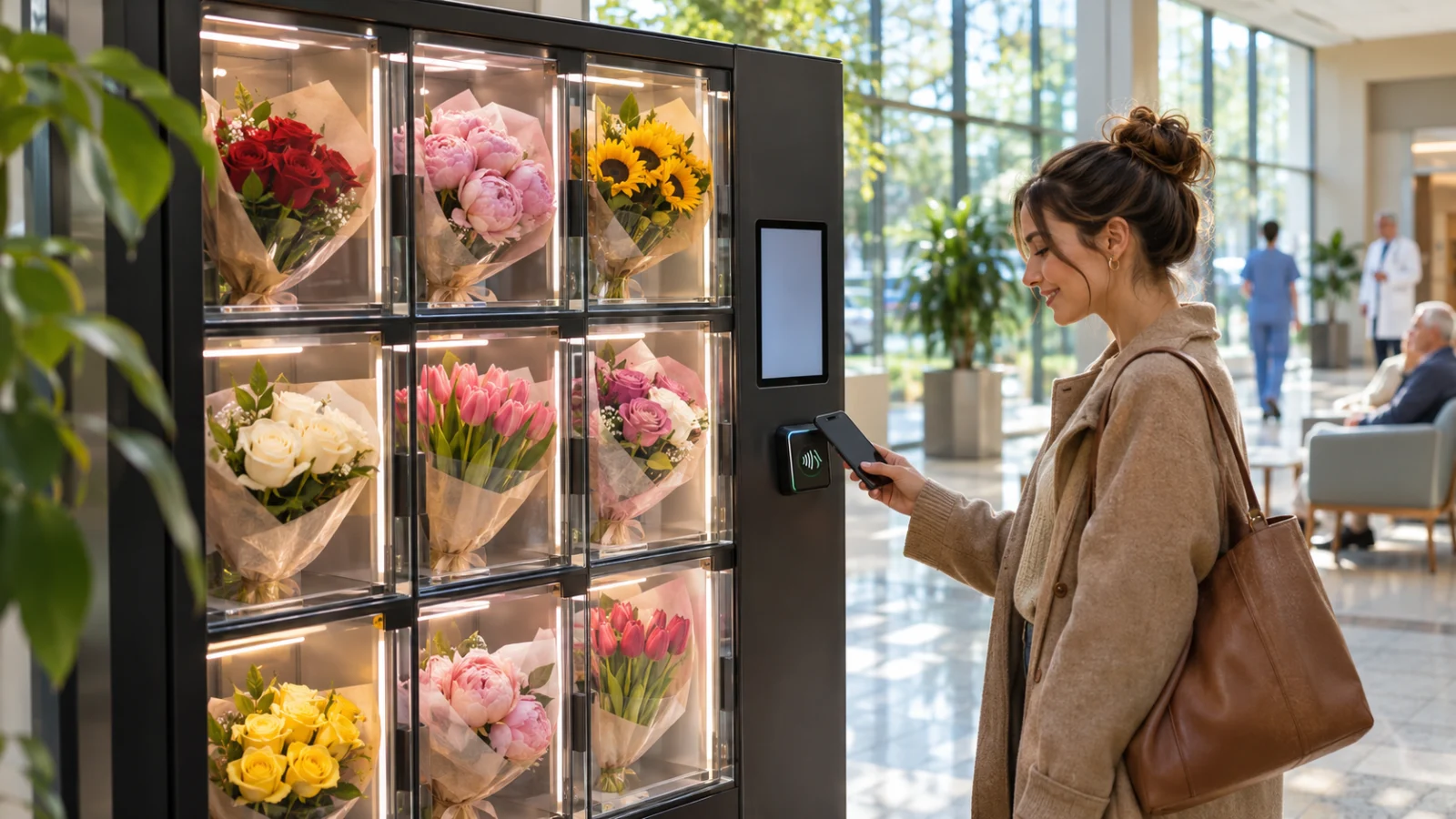
Illustration: FinPico
A flower vending machine is a refrigerated, 24/7 kiosk that sells ready-made bouquets, usually for about $25 to $75 each. A full-size machine from a U.S. seller is listed at about $11,500, and after flowers, the location’s cut and card fees you might keep roughly $15 of a $35 bouquet. The catch is that flowers die. Unsold bouquets are pure loss, so the right location and careful stocking decide whether this business works. Here are the real costs, the profit math and how to start.
Key takeaways
- Good margin per sale: on a $35 bouquet, roughly $15 can stay with you after flowers, wrap, the location’s share, card fees and an allowance for wasted flowers.
- Waste is the real risk. A snack can sit for months; a bouquet lasts days. A slow spot loses money on flowers you throw out.
- Location decides everything: about half a sale a day barely earns anything, while five a day could pay back the machine in well under a year.
- Florists and flower farms have an edge because they already buy flowers at wholesale prices. If you are not one, partner with one.
How a flower vending machine works
Most modern flower machines look like a tall glass cabinet split into lockers. Each locker holds one or more bouquets and stays cool, so the flowers last longer than they would on an open shelf. A customer picks a bouquet on the touchscreen, taps a card or phone, and that locker door unlocks.
One full-size model sold by a U.S. dealer has about 18 lockers for up to 54 floral products, cooling that can be set from 39°F to 77°F, contactless card payment and a standard outlet. It stands about 7 feet tall and weighs around 816 pounds, so the floor and the delivery route matter.
The appeal for buyers is simple: fresh flowers at 10 p.m., on the way into a hospital, or on a forgotten anniversary, without a florist being open.
Real examples: who is doing this in the U.S.
A Texas flower farm: Freshly Cut Stems placed a 24/7 self-service flower kiosk in downtown McKinney, Texas, stocked with bouquets from its own farm in Van Alstyne. Bouquets typically cost $35 to $75, and the owner restocks multiple times per week with seasonal blooms. (Vending Times)
A florist in a hospital: Houze of Bouquets, an Ohio florist, placed a refrigerated flower machine at Mercy Health St. Elizabeth Hospital in Youngstown. Hospital officials said it fills a gap left after gift shop services became more limited. Customers browse on a touchscreen and pay by card or phone. (Retail Customer Experience)
Notice the pattern: both operators already had a supply of flowers. That is the biggest advantage in this business.
How much does a flower vending machine cost?
A U.S. dealer lists a full-size refrigerated flower machine at $11,450 (single) or $13,450 (double), with a 6 to 12 week lead time. Installation and the card reader are extra. Machines bought directly from overseas factories can cost less, but you then deal with freight, import costs and slower parts. If you import, ask for DDP shipping terms (explained in our cotton candy vending guide).
| Item | Typical cost | Notes |
|---|---|---|
| Refrigerated flower vending machine | $11,450–$13,450 | Listed U.S. price, single or double unit |
| Installation | About $1,830 | Listed as an add-on by the same dealer |
| Card reader | About $450 | Needed for contactless payments |
| Delivery (white glove) | Varies | Recommended for an 800+ lb machine |
| First flowers, wrap and sleeves | $300–$600 | Depends on how many lockers you fill |
| Custom wrap for the machine (optional) | About $1,100 | Branding that helps it get noticed |
| LLC, sales tax permit, local license | $100–$800 | Rules vary by state and city |
| General liability insurance | Quote needed | Many venues ask for proof of coverage |
For our math below, we use about $14,500 all-in for one machine with installation, a card reader and the first stock. If you are saving up for it, our savings goal calculator shows how much to set aside each month.
How much does a flower vending machine make?
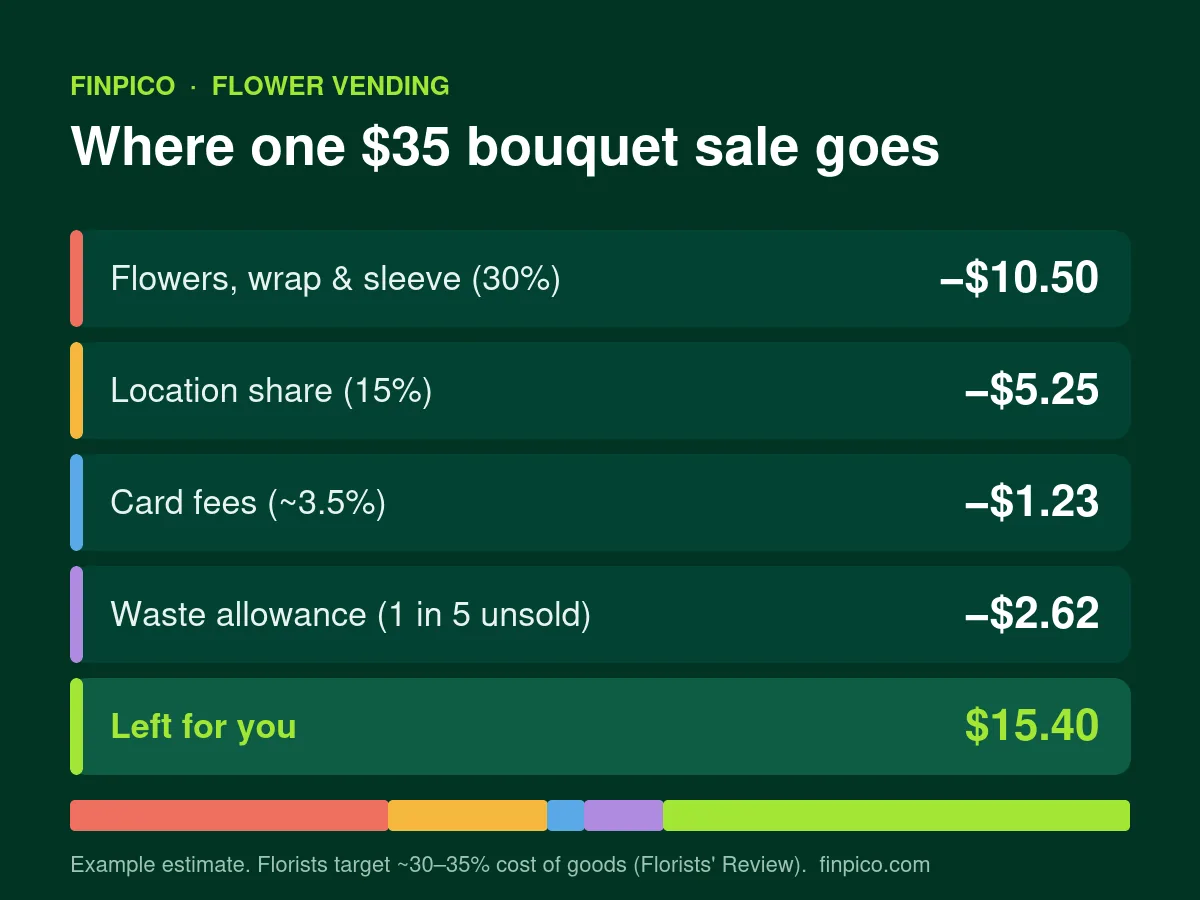
Florists usually aim to keep the cost of the flowers and supplies at around 30% to 35% of the retail price, according to pricing guidance in Florists’ Review. We use 30% below. Here is one $35 bouquet:
| One $35 sale | Amount |
|---|---|
| Flowers, wrap and sleeve (30%) | −$10.50 |
| Location share (15%) | −$5.25 |
| Card fees (about 3.5%) | −$1.23 |
| Waste allowance (1 in 5 bouquets thrown out) | −$2.62 |
| Left for you | about $15.40 |
Now the same machine in three kinds of locations. We assume about $105 a month in fixed costs (electricity for cooling, insurance and the machine’s cellular connection) and $14,500 all-in for the machine.
| Location | Bouquets sold | Monthly sales | Monthly profit | Pays back $14.5K in |
|---|---|---|---|---|
| Quiet spot | 1 every 2 days | $525 | $126 | Almost 10 years |
| Steady spot (hospital lobby, busy apartment complex) | 2 a day | $2,100 | $819 | About 18 months |
| Busy spot (transit hub, large hospital, mall) | 5 a day | $5,250 | $2,205 | About 7 months |
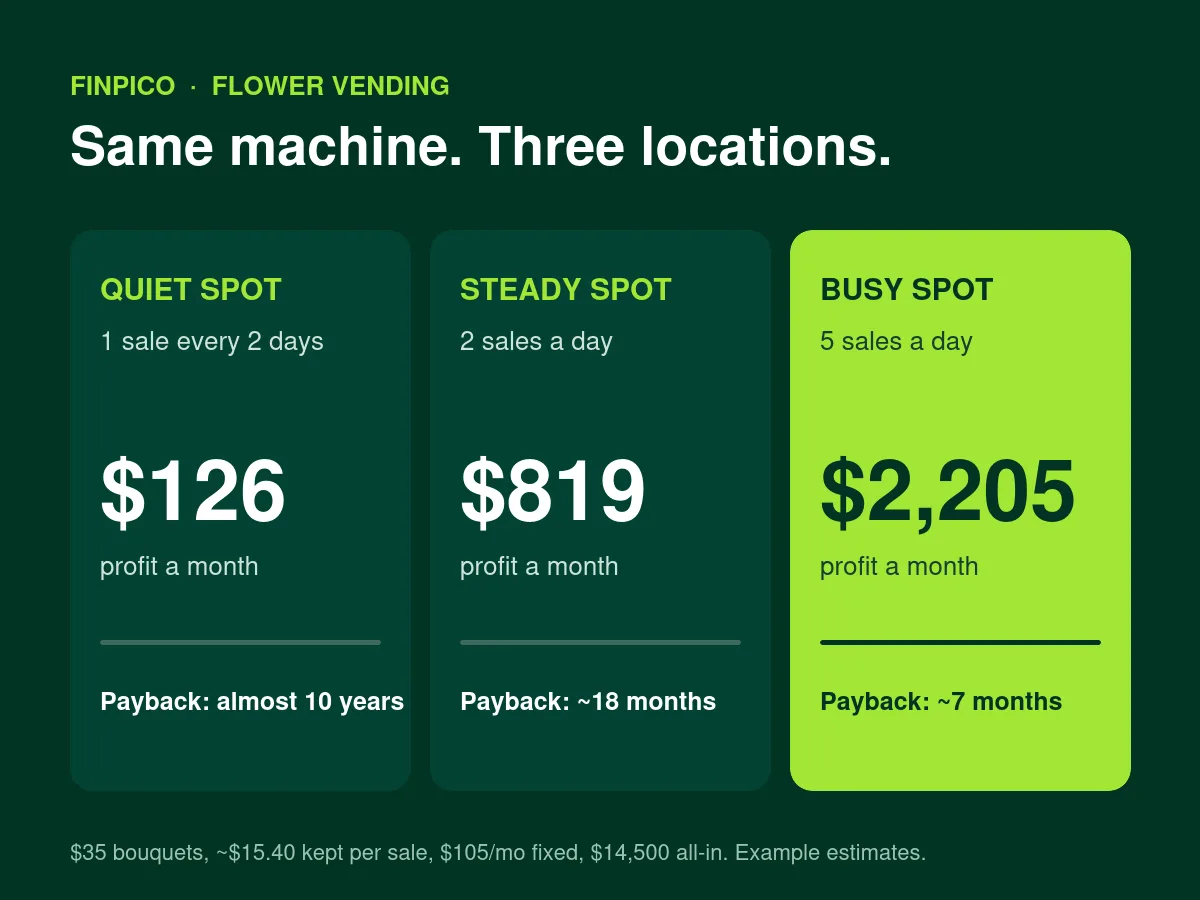
These are example estimates, not promises. In a slow spot, waste is usually worse than 1 in 5, which pushes profit even lower. Holidays such as Valentine’s Day and Mother’s Day can bring big spikes, but you cannot plan a whole year around two weeks.
Flower vending machine profit calculator
Change the numbers to match your location. Results are estimates.
The real risk: flowers that do not sell
With snacks, an unsold bag of chips just waits. With flowers, an unsold bouquet becomes trash in a few days, and you already paid for it. That is why operators like the Texas farm above restock several times a week in small amounts instead of filling every locker at once.
- Start with fewer bouquets than the machine holds, then add more once you see what sells.
- Track sales by day of the week. Most machines report sales in an app; stock up before Fridays and holidays, lightly before slow days.
- Use longer-lasting flowers and keep the cooling set correctly.
- Have a plan for older stock: lower the price on day-old bouquets in the app, or move them to your own shop if you have one.
Best locations for a flower vending machine
| Location | Why it works | Watch out for |
|---|---|---|
| Hospitals | Visitors want flowers on the way in, at any hour | Some units do not allow flowers; ask first |
| Train, subway and bus stations | Huge foot traffic and last-minute gift buyers | High fees and long approval processes |
| Large apartment complexes | Residents buy for dates, birthdays and guests | Need enough units to create steady demand |
| Malls and grocery store entrances | Steady shoppers, many impulse buys | Competition with in-store flower stands |
| Near cemeteries and funeral homes | Flowers are what people came for | Ask about local rules and be respectful |
| Downtown streets near restaurants | Evening and date-night buyers | Weather, security and permits for outdoor units |
Ask the venue manager first, before you buy anything. A short pitch you can adapt:
For a simple written agreement, use our vending placement agreement template.
Where to get the flowers
- Partner with a local florist: they make the bouquets, you run the machine, and you split the margin. This is the easiest path if you have never arranged flowers.
- Buy from a wholesale florist and make simple wrapped bouquets yourself. Cheaper per bouquet, but you need time and some skill.
- Work with a local flower farm for seasonal stems, like the McKinney example. Farm flowers can be a selling point on the machine’s wrap.
Is a flower vending machine a good business?
Pros
- Strong margin per sale; a $35 bouquet can leave about $15.
- Open 24/7 when florists are closed.
- Few competitors in most U.S. towns so far.
- A natural add-on for florists and flower farms.
Cons
- Unsold flowers are a total loss within days.
- Expensive machine: about $11,500+ before extras.
- Restocking several times a week takes real time.
- Only works where people already want to buy flowers.
How to start a flower vending machine business in 7 steps
- Secure the location first. Get a signed agreement before you order a machine.
- Line up your flower supply. Agree prices with a florist, wholesaler or farm, including how often they can deliver.
- Register the business. Form an LLC if it suits you, get a sales tax permit and check local licensing. The SBA’s guide to licenses and permits is a good start.
- Choose the machine. Ask for the warranty in writing, the lead time, U.S. parts availability and a video of the exact model running.
- Check power, floor and delivery route. An 800-pound machine needs a solid floor, a nearby outlet and a clear path in.
- Stock lightly and price clearly. Start with a few price points, such as $25, $35 and $45.
- Restock on data. Use the machine’s app to plan visits around what actually sells, and adjust the mix every week.
Common mistakes to avoid
- Buying the machine before a location agrees in writing.
- Filling every locker on day one and throwing half of it away.
- Choosing a spot with traffic but no reason to buy flowers.
- Forgetting installation, delivery and the card reader in the budget.
- Believing seller income claims. Check them with the calculator above.
Flower vending machine FAQ
How much is a flower vending machine?
A full-size refrigerated flower vending machine from a U.S. dealer is listed at about $11,450, or $13,450 for a double unit. Installation (about $1,830) and a card reader (about $450) are extra.
Are flower vending machines profitable?
They can be in the right spot. In our example, a $35 bouquet leaves about $15.40 after costs and waste. At 2 sales a day that is about $819 a month; at 1 sale every 2 days it is only about $126.
Where can I buy a flower vending machine?
From U.S. vending equipment dealers or directly from overseas manufacturers. Dealers cost more but usually offer U.S. support and faster parts; direct imports can be cheaper but add freight, import costs and longer lead times.
Do flower vending machines need refrigeration?
Yes, for fresh flowers. Refrigerated lockers keep bouquets cool so they last longer. One U.S. model lets you set the temperature from 39°F to 77°F.
How often do you restock a flower vending machine?
Usually several times a week, in small amounts, so the flowers stay fresh and less stock is wasted. Use the machine’s sales data to plan visits.
The bottom line
A flower vending machine can turn a $10 bouquet into a $35 sale at any hour, which is why the idea is spreading. But flowers do not wait. The business works when you have a cheap, steady flower supply and a spot where people already want flowers, like a hospital or a busy station. Secure that first, stock lightly, and test your numbers with the calculator before you spend $14,000 on a machine.
Sources and further reading
- Vending Times: Texas town hosts flower vending machine — Freshly Cut Stems’ 24/7 kiosk, bouquet prices and restocking.
- Retail Customer Experience: Self-service floral vending machine fills a gap — Houze of Bouquets’ hospital machine.
- VMFS USA: Flower vending machine listing — price, add-ons, capacity, temperature range and weight (seller’s figures).
- Florists’ Review: Pricing guidance for florists — markup and cost-of-goods targets.
- U.S. Small Business Administration: Licenses and permits
Last reviewed by Rizwan Mughal on November 8, 2026. Figures are estimates based on the sources above and will vary by location.
Rizwan Mughal
Rizwan Mughal is the founder and editor of FinPico. He researches budgeting, saving and small-business costs using official sources such as the CFPB, the Bureau of Labor Statistics and the Federal Reserve, and builds the free FinPico calculators. Every guide is checked against our editorial policy and updated when the numbers change.