
FinPico explains general financial concepts and calculator assumptions. Verify current terms and rules with official sources before acting.
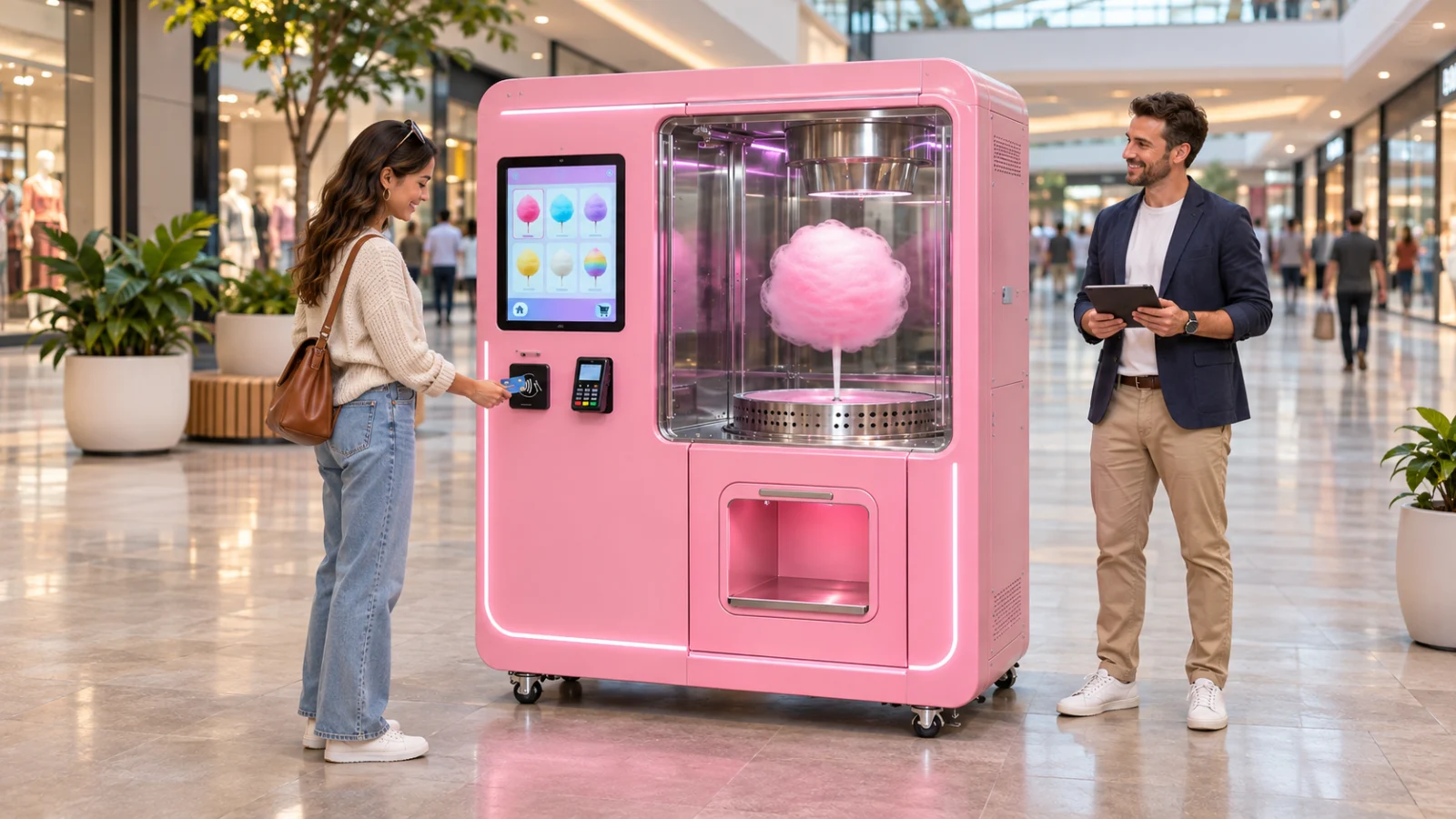
Illustration: FinPico
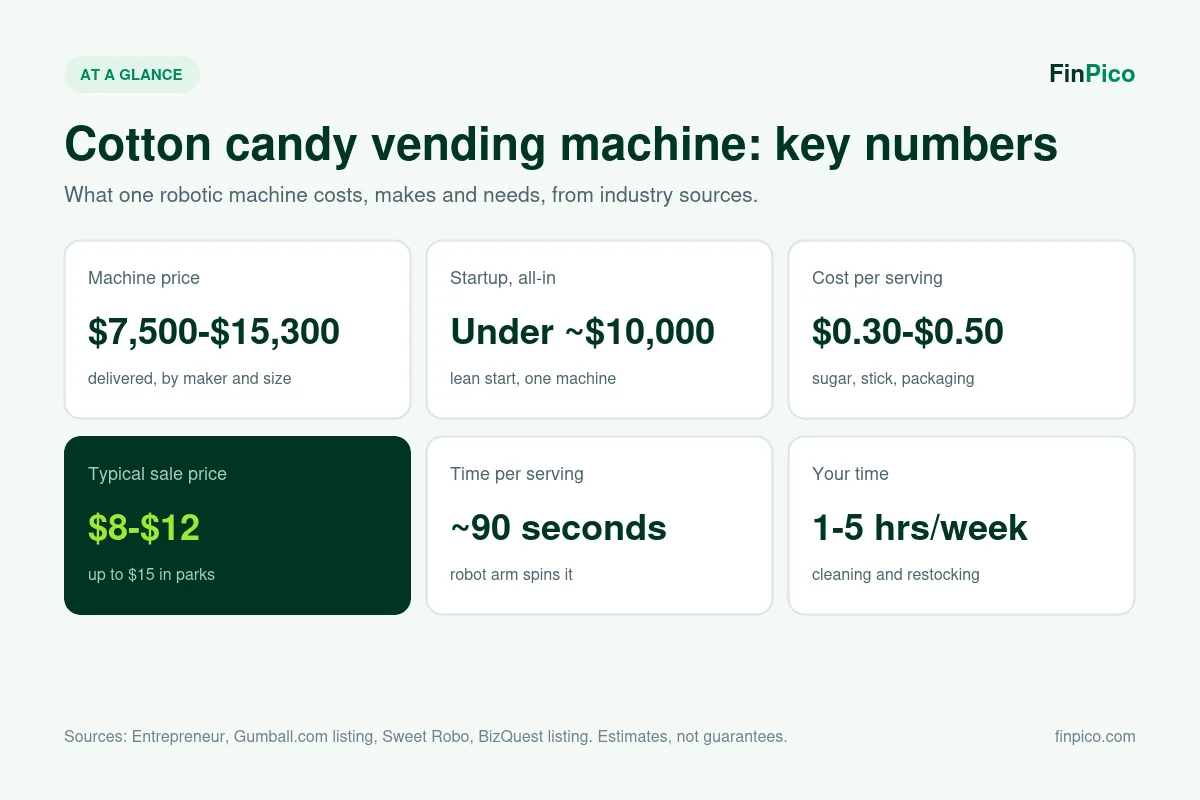
A cotton candy vending machine is a robot that spins fresh cotton candy in about 90 seconds while customers watch, then sells it for around $8 to $12. The sugar and stick cost only about 30 to 50 cents, so the margin per sale is huge. But the machines cost $7,500 to $15,000+, they need cleaning several times a week, and they only work in busy, family-friendly places. Here are the real numbers, the profit math and how to start.
Key takeaways
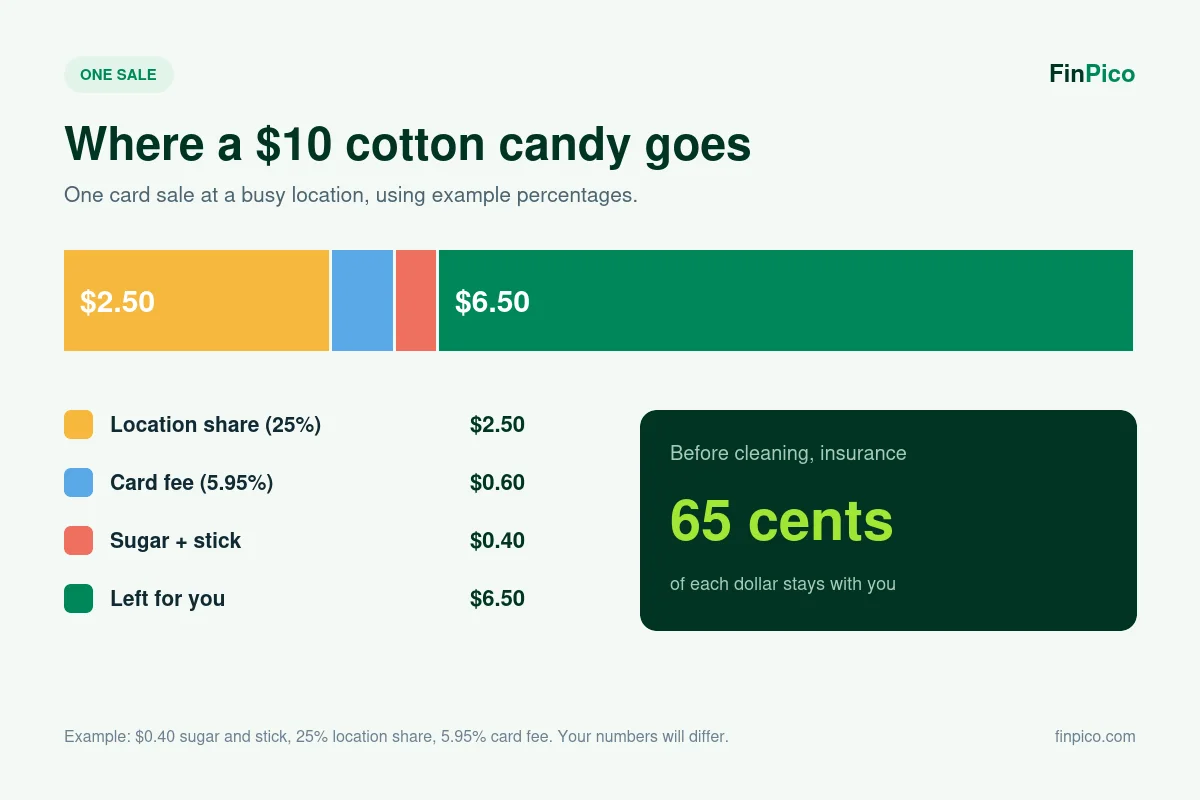
- The margin is the big draw: about 65 cents of every dollar can stay with you after sugar, location share and card fees.
- Location decides everything. At 2 sales a day the machine barely covers its costs. At 25 a day in a busy park it can pay itself back in a few months.
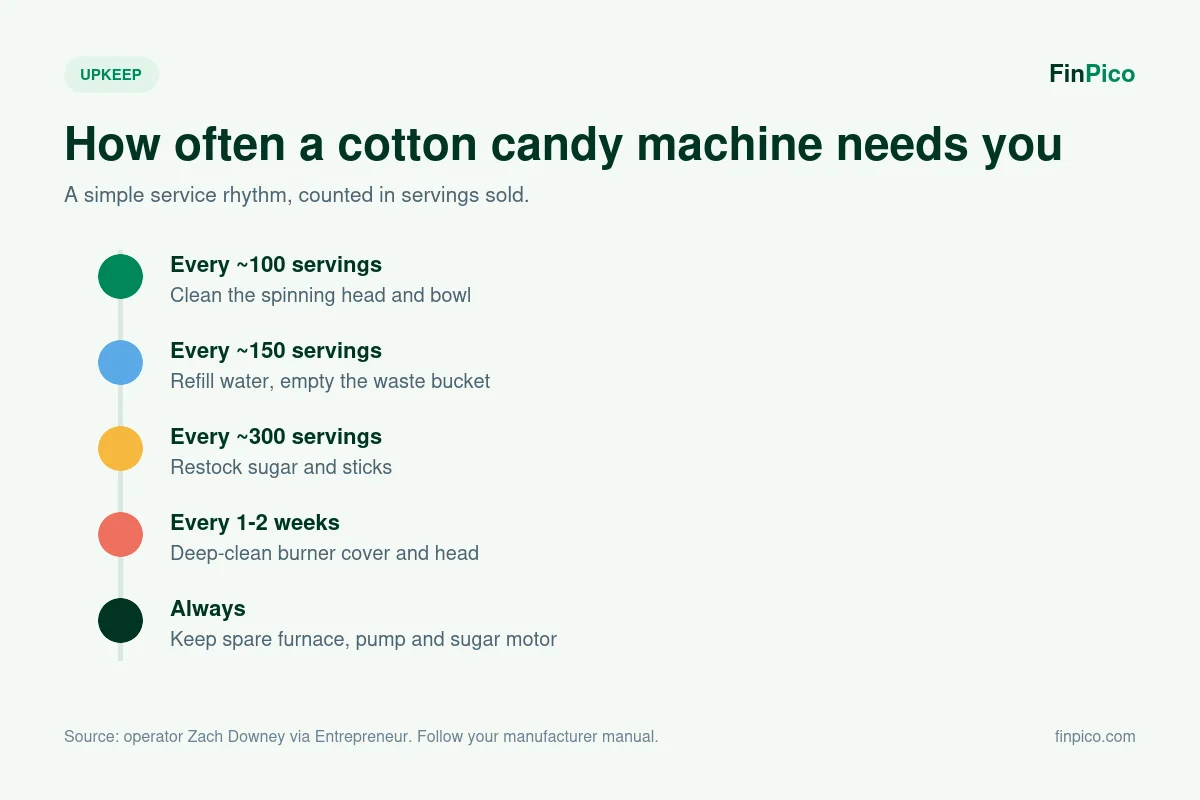
- It is not hands-off. Plan on cleaning every ~100 servings and short visits 1–3 times a week.
- Secure the location before you order a machine, and import on DDP shipping terms to avoid surprise costs.
How a cotton candy vending machine works
The customer picks a design on a touchscreen, pays by card or phone, and watches through the glass as a robotic arm spins colored sugar into a flower, heart or cloud shape on a stick. One serving takes about 90 seconds. A full-size machine holds enough sugar and sticks for up to 350 servings per fill, according to a current listing on Gumball.com.
That show is the whole business. People, especially kids, stop to watch, film it and share it. That is why these machines charge far more than a bag of chips and why they belong in places where families are already spending money.
Real example: a college student’s cotton candy route
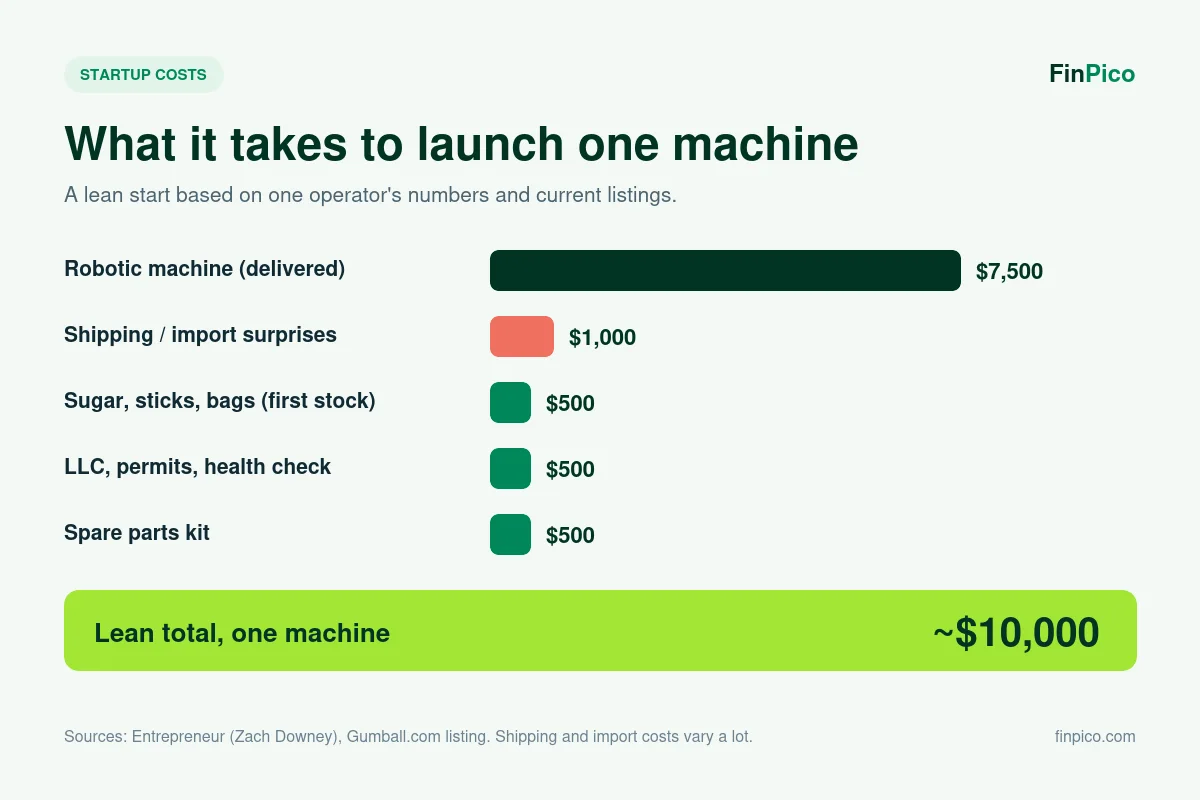
Zach Downey started Distinctive Vending while studying at James Madison University, after a plan for a pizza vending machine fell through. He placed robotic cotton candy machines in high-traffic spots such as resorts and amusement parks, and told Entrepreneur the business was on track for about $500,000 in 2024. He says his startup cost was “under $10,000” for a machine of about $7,500 plus about $500 in supplies, that a serving costs him about $0.30 to make, and that he charges up to $15.
He is also open about the problems: his first machine shipped on terms that cost him about $3,000 extra in import tax and transport, early machines broke down, and he learned the hard way that the machines can’t be left alone for a month. This is one standout success, not a typical result.
How much does a cotton candy vending machine cost?
Prices depend on the maker, size and where you buy. One operator paid about $7,500 delivered for a machine from a Chinese manufacturer (Entrepreneur), while a full-size robotic machine sold in the U.S. through Gumball.com lists at $15,293.99. Turnkey packages that bundle a machine with training and placement help are advertised for about $15,000 on business-for-sale sites.
Your starter shopping list
| Item | Typical cost | Notes |
|---|---|---|
| Robotic cotton candy machine | $7,500–$15,300 | Lower end is usually imported directly |
| Shipping, import tax, delivery | $500–$3,000+ | Ask for DDP terms so these are included |
| Colored sugar, sticks, bags | About $500 | Enough to start; cost per serving ~$0.30–$0.50 |
| Spare parts kit | Several hundred dollars | Furnace, water pump, sugar motors |
| LLC, permits, health department check | $200–$1,000 | Rules for food vending vary by city and state |
| General liability insurance | About $100–$150 a month | Per Zach Downey; get your own quotes |
| Cleaning kit | Low | Brushes, food-safe cleaner, towels, a bucket |
If you are saving up for a machine, our savings goal calculator shows how much to put aside each month.
How much does a cotton candy vending machine make?
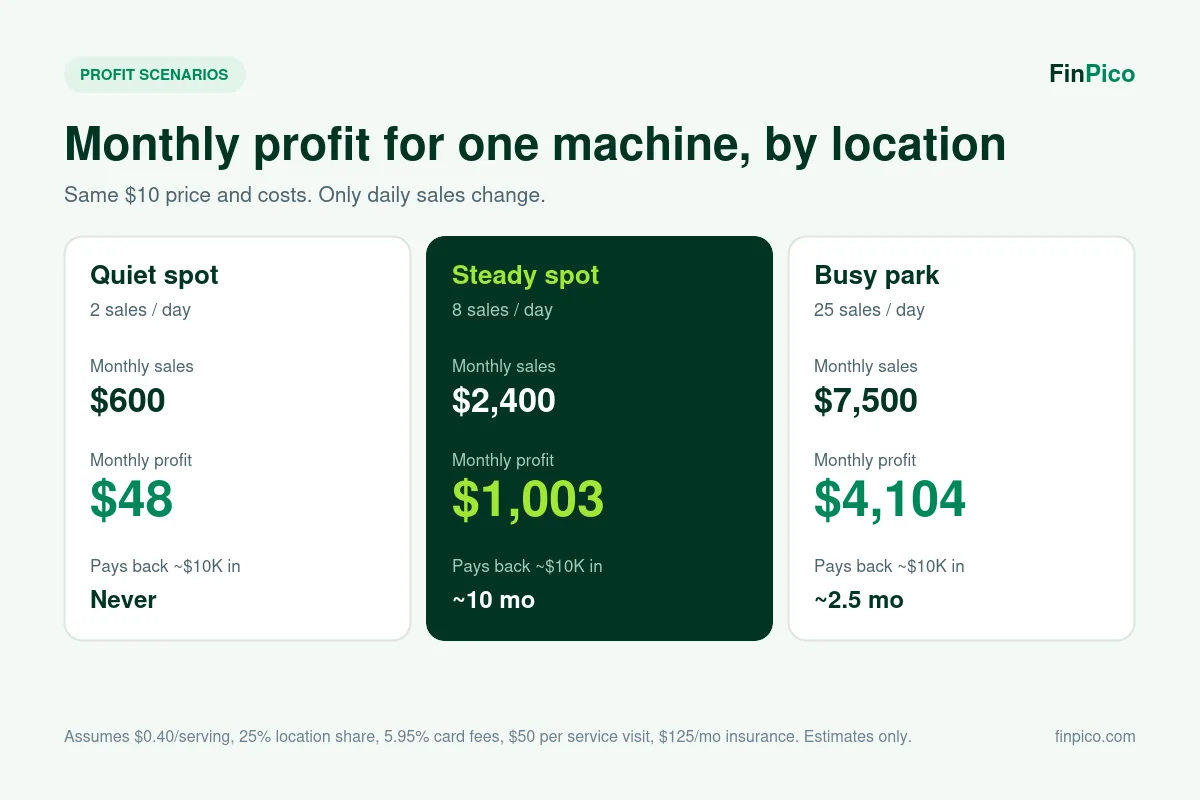
Because each sale is $8 to $12 and costs well under a dollar to make, the machine can earn a lot in the right spot. But it only earns when people walk past it. We ran the numbers for one machine at three kinds of locations, using these assumptions:
- Price: $10 per serving, cost per serving: $0.40
- Location share: 25% of sales (busy venues usually ask for a bigger cut than offices)
- Card fees: 5.95% of sales
- Cleaning and restocking: $50 per visit, 1 to 3 visits a week (about 5% of revenue, as Downey describes)
- Insurance: $125 a month; machine all-in: about $10,000
| Location | Sales per day | Monthly sales | Monthly profit | Pays back $10K in |
|---|---|---|---|---|
| Quiet spot | 2 | $600 | $48 | Practically never |
| Steady spot (mall, arcade) | 8 | $2,400 | $1,003 | About 10 months |
| Busy park or resort | 25 | $7,500 | $4,104 | About 2.5 months |
The gap is enormous. The lesson is the same as with any vending machine: a weak location can sink the business, while a strong one can pay for the machine within one season. These are our example estimates, not promises, and seasonal places like amusement parks can be slow for months.
Cotton candy machine profit calculator
Change the numbers to match your location. Results are estimates.
Is a cotton candy vending machine a good business?
Pros
- Very high margin: pennies of sugar sell for $8–$12.
- The robot show markets itself; people film and share it.
- Few competitors in most towns so far.
- Works without staff once placed.
Cons
- Expensive machine, often imported with long lead times.
- Sticky, frequent cleaning; more upkeep than a snack machine.
- Breakdowns happen; you need spare parts and some repair skill.
- Only works in busy, family places, which take a bigger cut.
Best locations for a cotton candy vending machine
| Location | Why it works | Watch out for |
|---|---|---|
| Amusement parks and water parks | Families ready to spend on treats | Seasonal; higher revenue share |
| Resorts and hotels | Kids with free time, all year | Need management approval |
| Malls and family entertainment centers | Steady weekend traffic | Rent or share can be high |
| Arcades, trampoline parks, bowling alleys | Birthday parties every weekend | Space near the entrance matters |
| Zoos, aquariums, stadiums | Huge crowds on event days | Long contracts, strict rules |
Look for a spot near the entrance or the main walkway, with a standard power outlet. A full-size machine stands about 8 feet tall and weighs around 750 pounds, so check doorways and floors before you order.
How to start a cotton candy vending machine business in 7 steps
1. Find and secure the location first
Downey says buying the machine before you have a location “increases your risk.” Visit venues in person and ask for the manager. A short pitch you can adapt:
For a ready-to-use contract, see our vending placement agreement template.
2. Check local food and business rules
Cotton candy is food, so ask your city or county health department what applies, and register your business and sales tax permit. The SBA’s guide to licenses and permits is a good place to start.
3. Choose a reliable machine and seller
Many online listings resell machines from only a handful of real manufacturers. Ask for videos of the exact model running, the warranty in writing, and parts availability in the U.S.
4. Import on DDP terms
DDP (delivered duty paid) means the seller handles shipping and import costs to your door. Downey’s first machine came on other terms and cost about $3,000 extra.
5. Check power and space
One U.S. listing specifies a 110V, 25-amp circuit (or 220V, 10-amp). Confirm the outlet, the floor and the delivery route with the venue.
6. Stock up and set prices
Order colored sugar, sticks and bags, and set prices to fit the venue, often $8 to $12. Keep spare parts on hand, since parts from overseas can take one to two weeks.
7. Set a cleaning and service routine
Track sales in the machine’s app and schedule visits around servings sold, not the calendar.
Common mistakes to avoid
- Ordering the machine before you have a signed location.
- Accepting shipping terms that leave import costs to you.
- Underestimating cleaning. Sugar gets everywhere; a dirty machine breaks and loses sales.
- No spare parts. A two-week wait for a part can mean two weeks of zero sales.
- Believing turnkey income claims. Business-for-sale listings often show best-case math. Check it yourself with the calculator above.
Cotton candy vending machine FAQ
How much does a cotton candy vending machine cost?
Roughly $7,500 delivered from an overseas manufacturer to about $15,300 for a full-size robotic machine sold in the U.S. Plan on about $10,000 all-in for a lean start with one machine.
How much profit does a cotton candy vending machine make?
It depends on traffic. In our example, a quiet spot with 2 sales a day earns almost nothing, a steady spot with 8 sales a day earns about $1,000 a month, and a busy park with 25 sales a day can earn about $4,000 a month after costs.
How much does one serving cost to make?
About $0.30 to $0.50 for the sugar, stick and packaging, while most machines sell a serving for $8 to $12.
How long does it take to make one cotton candy?
About 90 seconds per serving on most robotic machines.
Is a cotton candy vending machine passive income?
Not fully. It needs cleaning about every 100 servings, restocking and occasional repairs, usually 1 to 5 hours a week per machine depending on how busy it is.
Where is the best place to put a cotton candy vending machine?
Busy, family-friendly places such as amusement parks, resorts, malls, arcades, trampoline parks and zoos, ideally near the entrance or main walkway.
The bottom line
A cotton candy vending machine turns cheap sugar into an $8 to $12 treat with a built-in show, which is why the margins look so attractive. The catch is the high machine cost, regular cleaning and the need for a genuinely busy location. Lock in the spot first, buy carefully, and run the numbers with the calculator before you spend a dollar.
Sources and further reading
- Entrepreneur: How I started a passive income business earning $500,000 — Zach Downey’s startup costs, cost per serving, pricing, maintenance and shipping lessons.
- DollarSprout: How this college student built a $500K vending machine business — number of machines and early setbacks.
- Gumball.com: Cotton candy vending machine listing — price, servings per fill, size, weight and power.
- Sweet Robo: Cotton candy vending machine guide — time per serving and operator hours (manufacturer’s own figures).
- BizQuest: Turnkey cotton candy vending business listing — package price, cost per serving and retail price range (seller claims, unverified).
- VendingExchange: Permits and insurance for a vending business
- U.S. Small Business Administration: Licenses and permits
Last reviewed by Rizwan Mughal on November 7, 2026. Figures are estimates based on the sources above and will vary by location.
Rizwan Mughal
Rizwan Mughal is the founder and editor of FinPico. He researches budgeting, saving and small-business costs using official sources such as the CFPB, the Bureau of Labor Statistics and the Federal Reserve, and builds the free FinPico calculators. Every guide is checked against our editorial policy and updated when the numbers change.